 Quizstack
8 Golden Rules from Refactoring UI That Transform Your Designs
Simple principles from Refactoring UI that separate amateur interfaces from polished products.
16/06/2026

Something profound shifted in software development. The job description didn't change on paper, but the daily gesture transformed completely.
Developers used to face the blank page. We extracted solutions from our minds, translated thoughts into syntax, built programs character by character from nothing. The writer's craft: creation ex nihilo.
That era is ending.
Today, AI delivers raw material instantly. Functional code appears in seconds : verbose, sometimes clumsy, but present. Our role is no longer to produce this matter but to sculpt it. We carve away the excess, refine the forms, reveal the elegant solution hidden within the rough block.
The blank page disappeared. In its place: a block of marble waiting for the chisel.
Before generative AI, writing code was literary work. You learned syntax until it became automatic. You memorized patterns, APIs, and idioms. Senior developers were recognizable by their fluency : the right words came without searching.
We took pride in code written from scratch. The empty editor was a challenge to fill. Each line emerged from our mind, bearing our style, our choices.
This model rewarded verbal facility alongside deeper skills. You needed to understand algorithms and architecture, but you also needed to recall whether JavaScript's array method was includes or contains without checking.
Now I describe what I need, and matter appears. Not refined matter, but raw material that would have taken thirty minutes to produce by hand.
My gesture changed. Instead of adding words to an empty page, I remove what's superfluous from an existing block. Instead of building, I carve. Instead of creating from nothing, I reveal the form hidden in the mass.
A typical session: AI generates a solution. I read, chisel in hand. This method is too long : I split it. This abstraction is missing : I extract it. This name obscures intent : I rename. The raw code transforms progressively into sculpted code.
Michelangelo said he saw the angel in the marble and carved to set it free. The modern developer sees clean code in AI's rough output and refines to reveal it.
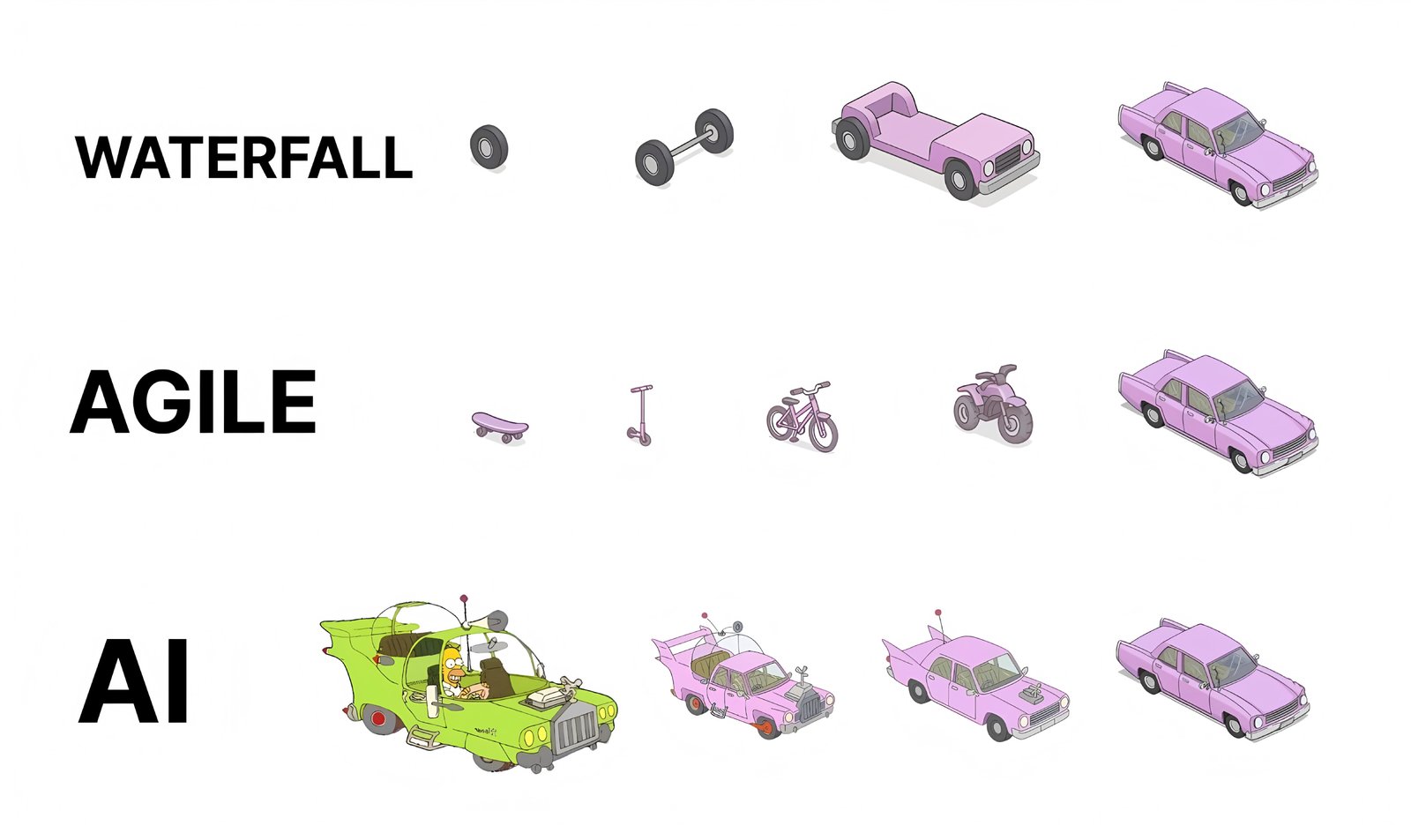
Here's the paradox: AI provides the matter, but only the sculptor knows what form to give it.
Recognizing a good algorithm from a bad one requires understanding what wasn't generated. When AI proposes O(n²) where O(n log n) is possible, only algorithmic knowledge detects the flaw. The matter looks identical; the trained eye sees the difference.
Architecture lives in the sculptor's mind, not the raw material. Which services should exist ? How should they communicate ? AI generates code for any structure you describe, but choosing the right structure remains human judgment.
The sculptor's critical eye became more important, not less. Every generated line requires evaluation. Does this handle edge cases ? Are there security implications ? Will this scale ? Reviewing AI output demands the same rigor as reviewing human code, perhaps more since AI confidently produces plausible-looking flaws.
Some developers treated algorithmic knowledge as interview preparation rather than practical skill. The sculptor's era makes this gap dangerous.
When you write code yourself, limitations become obvious. You feel the resistance of a bad approach. When AI generates instantly, that resistance disappears. A quadratic algorithm arrives as quickly as a linear one. The rough block looks the same whether it contains an angel or a monster.
The developer without trained eye accepts the block as-is. The one who masters form questions, carves, transforms. Raw code isn't finished code.
The paradox: AI eliminates manual production while amplifying the need to understand what should be produced. You don't need to recall quicksort's implementation, but you need to know when sorting matters and what shape it should take.
This transition challenges how developers see themselves.
Pride in typing speed feels misplaced when AI generates faster. Satisfaction in remembering APIs seems futile when the machine recalls everything. The writer's craft (fingers on keyboard, words flowing from memory) gives way to another practice.
But the sculptor's craft is no lesser. It requires an eye for form, understanding of materials, vision of the possible. A sculptor who accepts every rough block produces a chaotic gallery. A developer who accepts all generated code produces a fragile system.
Our value lies in knowing what good form looks like. AI provides the marble. We reveal the statue.
The paradigm shifted, but the foundation didn't. Algorithmic thinking, architectural vision, critical judgment matter as much as ever... perhaps more, because the sculptor must see what the raw block doesn't show.
The job isn't easier. It's different. We spend less time producing matter and more time sculpting it. Less time writing and more time carving. Less time creating from nothing and more time revealing essential form.
The pen gave way to the chisel. But the eye remains irreplaceable.
Simple principles from Refactoring UI that separate amateur interfaces from polished products.

TypeScript isn't a new language—it's JavaScript with guardrails that become essential at scale.

Object Calisthenics: 9 strict rules to sharpen your object-oriented code through deliberate practice.
Test your HTML, CSS, JavaScript, PHP, SQL skills and more with free quizzes. Perfect for beginners learning to code or developers preparing for interviews.